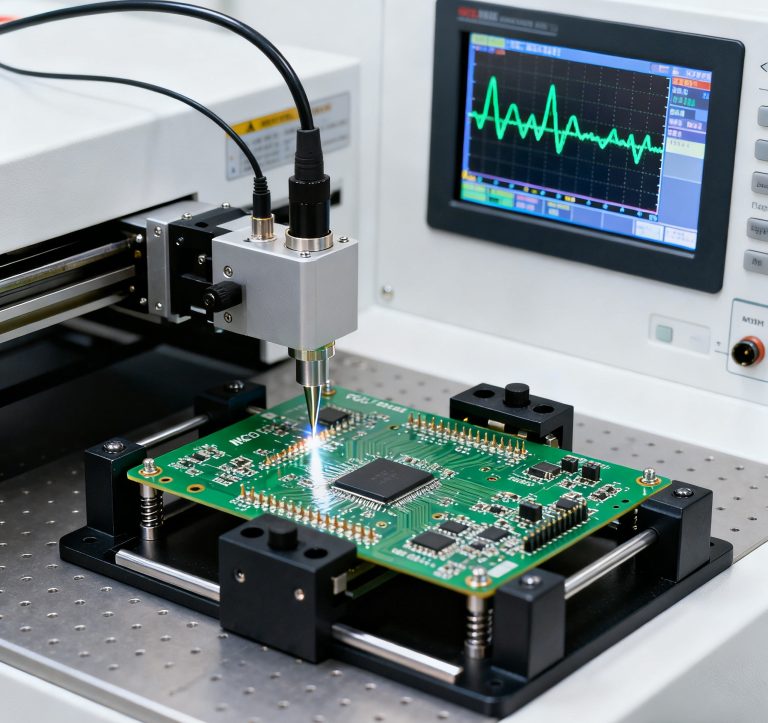
Ever stared at a smoking refrigerator control board at 2 a.m., wondering why your “simple” appliance failed again? You poured weeks into schematic capture, sourced components carefully, yet production halted because of a tiny component placement flaw. Sound familiar? Here’s the hard truth: skipping professional PCBA design services isn’t saving money—it’s burning cash, timelines, and credibility. I’ve watched appliance manufacturers lose $ 50k+ on avoidable errors.
Avoiding these pitfalls requires more than luck—it demands structured pcba design services that integrate DFM, signal integrity analysis, and thermal management from day one. Let’s dissect the seven costliest mistakes and how expert PCBA layout prevents them in smart home applications.
Why Professional PCBA Design Services Prevent Costly Failures
Before we unpack the pitfalls, here’s your actionable roadmap:
✅ How design for assembly (DFA) prevents 30% production delays in appliance manufacturing
✅ Why signal integrity analysis saves smart refrigerator displays from field failures
✅ The thermal management gap that kills washing machine control boards
✅ Real ROI: How expert circuit board layout cuts rework by 55%
✅ Actionable checklist to audit your current workflow
This isn’t fear-mongering—it’s field-tested insight from Sanshun Smart’s decade of electronic design services with partners like Haier for their refrigerator LED lighting systems and smart display panels.
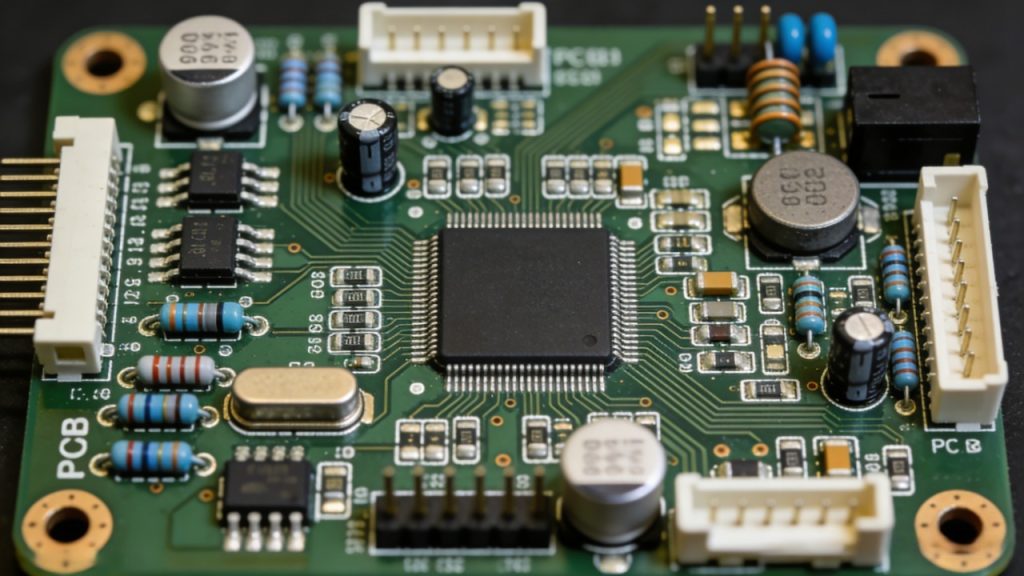
How Ignoring DFM Principles Can Cause PCBA Assembly Failures in Appliances?
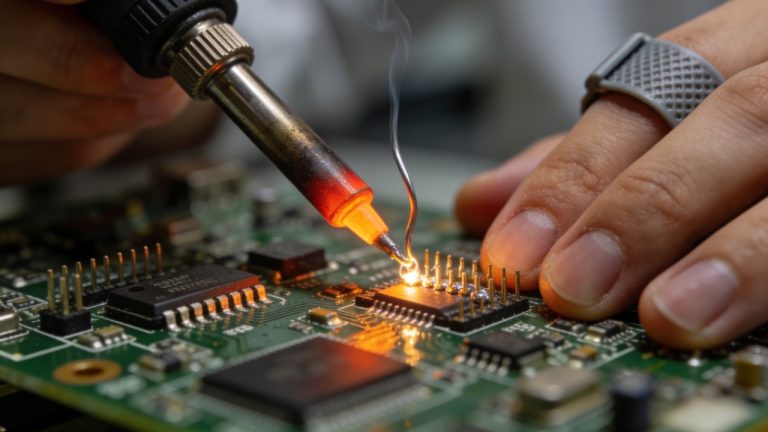
The Trap: A client’s refrigerator control board required manual soldering for 200+ units—costing $ 22k and 4 weeks. Why? No design for testability (DFT) or proper component placement planning for high-volume production.
Technical Insight: DFM isn’t optional. Trace spacing below manufacturer specs (e.g., <0.15mm for standard FR-4) causes solder bridging. Gerber validation catches this before fabrication. For appliance boards operating in humid environments, copper weight and moisture protection become critical.
| DFM Checkpoint | Engineering Principle | Risk if Ignored |
|---|---|---|
| Component placement | Minimize trace length for high-speed display interfaces | Signal degradation in LED panels |
| Solder mask clearance | ≥0.1mm per IPC-7351 for humid environments | Short circuits in washing machines |
| Via-in-pad rules | Filled vias required for BGA displays | Assembly defects in control panels |
How to Avoid Signal Integrity Failures in Smart Appliance PCBA Designs?
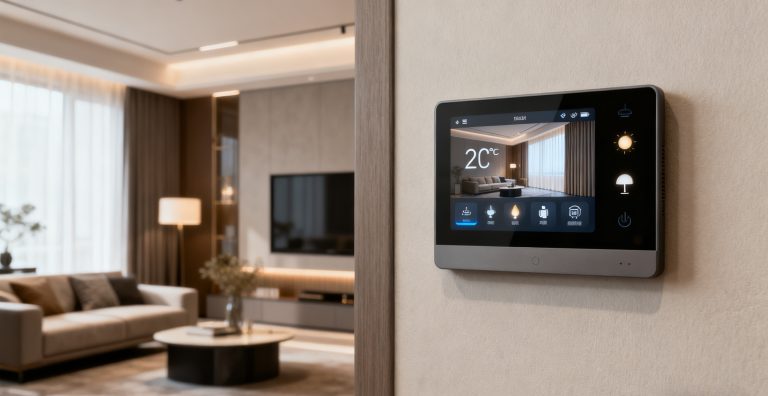
The Trap: A refrigerator LED display showed flickering patterns after 3 months. Root cause? Uncontrolled impedance in the high-speed display interface. No signal integrity analysis during layout.
Technical Insight: High-speed traces act as transmission lines. Impedance (Z₀) must match source/load: Z₀ ≈ (87/√(εᵣ+1.41)) * ln(5.98H/(0.8W+T)) (H=dielectric height, W=trace width, T=copper thickness, εᵣ=substrate constant) In refrigerator displays operating at -20°C to 40°C, thermal expansion changes εᵣ, requiring robust impedance margins.
| Failure Mode | Prevention Strategy | Tool Used |
|---|---|---|
| Display flickering | Controlled impedance traces for LVDS interfaces | ANSYS HFSS |
| Touch sensor drift | Ground shielding around capacitive sensors | SIwave |
| Communication errors | Layer stackup optimization for CAN bus signals | Altium Designer |
Why Poor Thermal Management Leads to Premature Appliance PCBA Failure?
The Trap: A washing machine control board failed after 8 months of operation. Thermal imaging revealed a power regulator hitting 105°C during spin cycles—far beyond its 85°C rating.
Technical Insight: Thermal resistance (Rθ) dictates heat flow: Rθ(j-a) = (Tj - Ta) / Power Strategic thermal vias (0.3mm diameter, 1mm pitch) reduce Rθ by 40%. For appliances with frequent on/off cycles, like air conditioners, thermal cycling fatigue must be calculated.
| Hotspot | Solution | Thermal Impact |
|---|---|---|
| Power regulators | 12+ thermal vias + 2oz copper pour | ΔT ↓ 25°C |
| LED drivers | Aluminum-backed PCBA sections | ΔT ↓ 30°C |
| Entire board | Thermal cycling validation (-40°C to +85°C) | Lifespan ↑ 3.5x |
💡 Prevent thermal runaway. Upload your design for a free thermal risk assessment. [Check Thermal Safety]
Why Component Sourcing Shortcuts Fail—And How PCBA Design Services Prevent Them?
The Trap: A smart oven’s main controller chip was discontinued mid-production. The manufacturer faced 6-month delays and $ 120k in obsolete inventory.
Pro Fix: Real-time BOM management across 500+ suppliers + lifecycle scoring. Dual-sourcing validation (Samsung/NXP alternatives) prevents single-point failures. For appliance manufacturers, extended temperature range (-40°C to +105°C) components are non-negotiable.
How EMI/EMC Compliance Oversights Trigger Certification Delays in Appliances?
The Trap: A smart refrigerator failed CE certification because the compressor motor noise interfered with Wi-Fi connectivity. $ 38k wasted on metal shielding retrofits.
Pro Fix: EMI/EMC compliance embedded early:
- Shielding design for motor control zones (copper cans, conductive gaskets)
- Dedicated ground planes for digital/analog sections
- Filter placement on power lines per CISPR 14-1 (household appliance standard)
Proof: Sanshun Smart’s “starry-sky” refrigerator lighting panels passed EMC on first submission—thanks to proactive filtering design.
Why Skipping Prototype Validation Costs 3x More Later?
The Trap: A dishwasher’s moisture sensor gave false readings in high-humidity environments. Field returns cost $ 210k before discovering the calibration circuit needed temperature compensation.
Pro Fix Cycle:
- Schematic capture review with environmental factors
- Environmental simulation (humidity, temperature cycling)
- PCBA prototyping with real-world appliance stress tests → 55% fewer iterations. Time-to-market accelerated by 40%.
How Poor Documentation Causes Assembly Errors (And How PCBA Design Services Solve It)
The Trap: 15% of refrigerator display panels arrived with misaligned touch sensors due to missing assembly drawing details.
Pro Fix Deliverables:
- Interactive assembly drawing with 3D STEP overlays for display modules
- Component placement maps with orientation guides
- Test point diagrams for QA teams specific to appliance testing → 80% fewer assembly errors. 99% first-time pass rates.
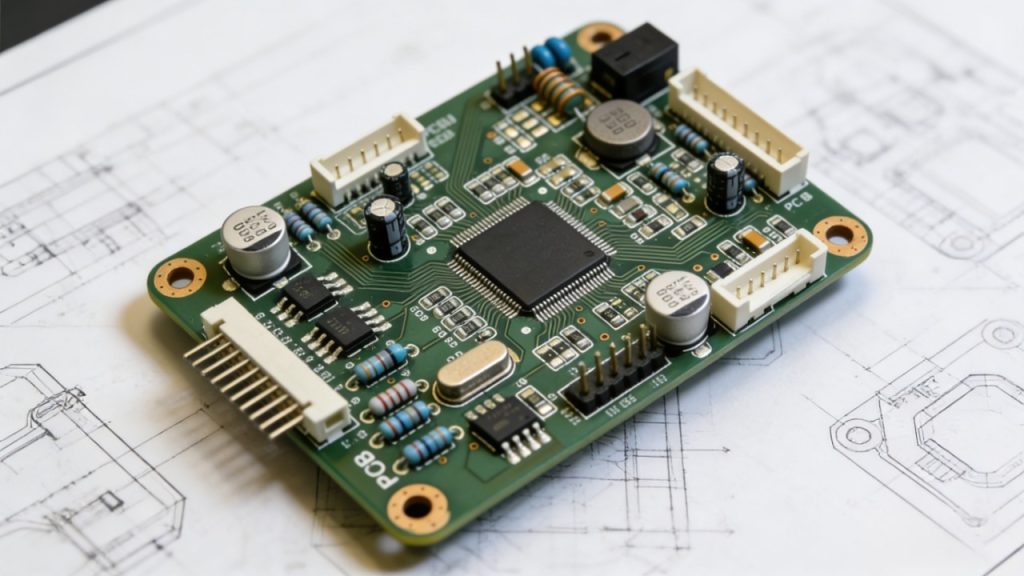
Why Sanshun Smart’s PCBA Design Services Deliver Measurable ROI for Appliance Manufacturers?
You’ve seen the risks. Now see the solution. At Sanshun Smart, we merge deep engineering rigor with real-world manufacturing insight for home appliances:
“Sanshun’s circuit board layout expertise integrated ‘starry-sky’ lighting into Haier refrigerators with zero design flaws. Their refrigerator LED light strip solutions now power 80% of Casarte premium models.” — Engineering Team
✅ ISO 9001:2015 & IPC-A-610 Class 3 certified
✅ UL-certified production facilities
✅ In-house SMT assembly + wave soldering = 30% cost savings
✅ Specialized in refrigerator light panel assemblies, temperature & humidity sensors, and control boards for major appliance brands
👉 Free DFM Health Check for Appliance PCBA.
Frequently Asked Questions About PCBA Design Services for Appliances
Q: What PCBA layer stackup is recommended for refrigerator LED display boards?
A: For LED displays in cold environments: 4-layer stack (Signal-GND-PWR-Signal) with thermal vias under high-power LEDs. Our PCBA design services optimize stackup for thermal cycling from -30°C to +50°C.
Q: How do you handle condensation risks in washing machine PCBA designs?
A: We integrate conformal coating specifications in our circuit board layout, selective potting for critical components, and humidity-resistant materials—all part of our specialized PCBAs for appliances.
Q: What testing protocols do you use for appliance PCBA reliability?
A: Beyond standard testing, we perform thermal cycling (-40°C to +85°C), humidity exposure (95% RH), and vibration testing per IEC 60068-2 standards—fully integrated in our PCBAs design services workflow.
Q: How to reduce PCBA prototyping costs for appliances?
A: Using virtual simulations and iterative design reviews can cut down physical prototypes by 55%, reducing costs significantly.