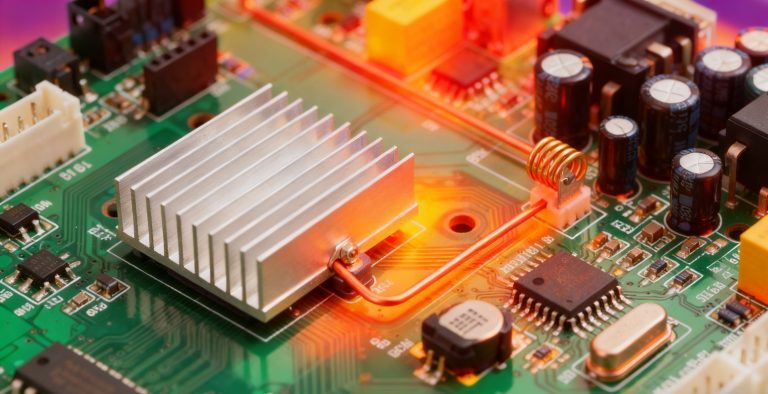
You’ve spent months perfecting your circuit design and validating your prototypes.
But the reality is, your product’s success hinges on the quality of your pcba production.
Even a flawless design can fail if the manufacturing process lacks precision. I’m talking about issues like solder paste defects, component shortages, or inadequate quality control that can kill your time-to-market.
You don’t just need an assembly line; you need a strategic partner.
In this guide, we are going to break down the entire manufacturing lifecycle at San Shun Smart. From turnkey PCB assembly and BOM sourcing to the final AOI inspection, you’ll learn exactly how to secure high-reliability boards that work the first time.
Let’s dive in.
The Real Deal on PCBA Production Stages
We understand that PCBA production is more than just placing parts on a board; it is a tightly controlled sequence of chemical and mechanical processes. At San Shun Smart, we treat every stage as a critical checkpoint. From the initial solder paste application to the final manual insertion, our one-stop turnkey service ensures that your design intent translates perfectly into physical hardware. We leverage advanced automation and rigorous process controls to minimize variability and maximize yield.
Solder Paste Printing: It’s All About the Stencil
The foundation of a reliable solder joint starts before a single component is placed. We prioritize precision in the Solder Paste Printing phase because the majority of soldering defects originate here.
- Stencil Alignment: We ensure exact alignment between the PCB pads and the stencil apertures.
- Paste Volume Control: Getting the right volume of paste is critical to prevent bridging or dry joints later in the process.
Our process ensures that the solder paste is deposited with uniform thickness and definition, setting the stage for a defect-free assembly.
SMT Assembly: Handling 01005s and Fine-Pitch BGAs
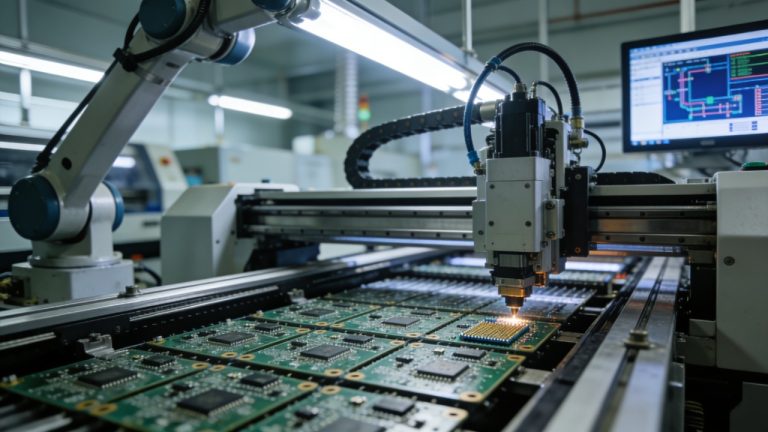
Speed means nothing without accuracy. We utilize high-end Fuji and Siemens SMT production lines to handle the complexities of modern electronics. These machines give us the capability to place components with extreme precision, essential for high-density boards.
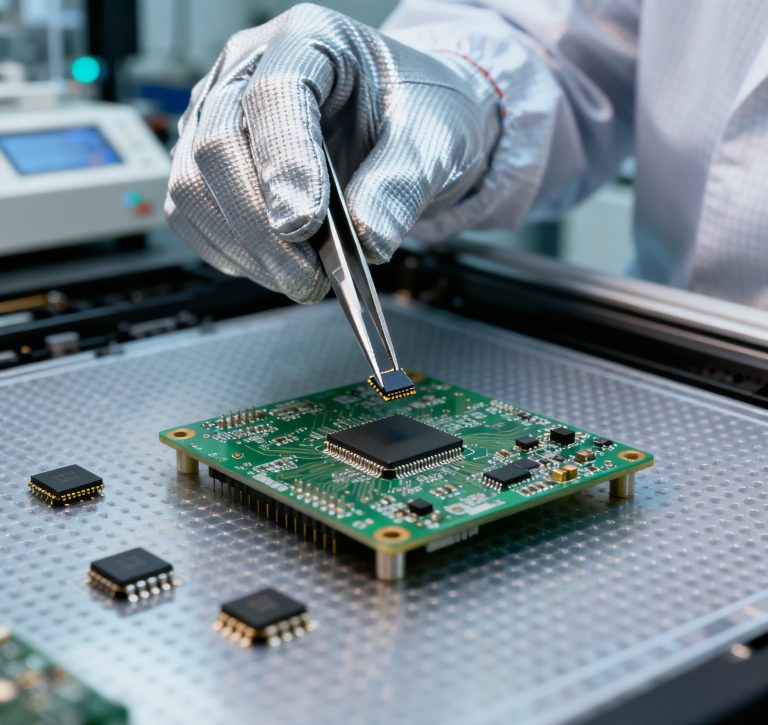
- High-Precision Placement: Our equipment effortlessly handles tiny passives and complex ICs.
- BGA Capability: We specialize in placing Ball Grid Arrays (BGAs) where visual inspection isn’t possible from the outside.
- Stability: The rigidity of our Siemens and Fuji lines ensures consistent placement pressure and accuracy, even for fine-pitch components.
Reflow Soldering: Why Thermal Profiles Matter
Once components are placed, the board moves to Reflow Soldering. This isn’t just about heating up the board; it is about following a specific thermal profile to ensure a solid intermetallic bond without damaging sensitive parts.
- Ramp-Up & Soak: We carefully control the pre-heat phase to activate the flux and remove volatiles.
- Reflow Zone: The temperature peaks just long enough to melt the solder and form the joint.
- Cooling: Controlled cooling prevents thermal shock and ensures a fine grain structure in the solder joint.
Through-Hole Technology (THT): Manual Precision for Legacy Parts
While SMT dominates, Through-Hole Technology (THT) remains vital for components requiring high mechanical strength, such as heavy connectors or power devices. Our DIP (Dual In-line Package) lines combine automation with skilled craftsmanship.
- Wave Soldering: Ideal for bulk soldering of through-hole components, ensuring consistent throughput.
- Selective Soldering: Used when specific components need soldering without disturbing nearby SMT parts.
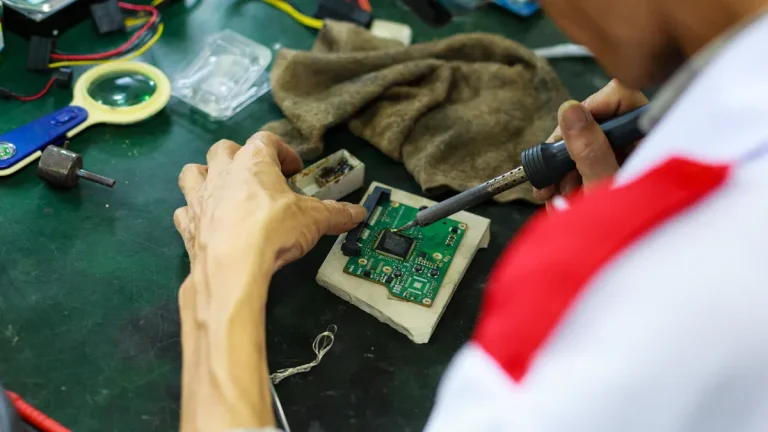
- Manual Soldering: Our skilled technicians handle complex assemblies that machines cannot process, ensuring every lead is trimmed and soldered to IPC standards.
Quality Control: We Don’t Guess, We Test
In PCBA production, speed means nothing without precision. We operate with a strict “zero defect” mindset across our entire manufacturing floor. Whether we are running a high-volume consumer electronics batch or a specialized medical device prototype, our quality assurance protocols remain rigid. We integrate multi-layer testing directly into the assembly lifecycle to ensure every board leaving our facility is ready for the real world.
Automated Optical Inspection (AOI) for Instant Feedback
Manual inspection can’t keep up with modern Surface Mount Technology speeds. We utilize Automated Optical Inspection (AOI) systems right on the SMT line to monitor production in real-time. This technology scans every board for:
- Placement Accuracy: Ensuring components are exactly where they need to be.
- Solder Defects: Catching bridges, voids, or insufficient solder immediately.
- Wrong Components: Verifying that the right part is on the right pad.
By catching these issues early in the SMT assembly phase, we prevent costly rework later and maintain a smooth workflow.
X-Ray Inspection: Seeing What’s Under the BGA
Complex components like BGA Assembly (Ball Grid Array) present a challenge because the solder joints are hidden underneath the chip. You can’t inspect what you can’t see with the naked eye.
We employ high-resolution X-Ray Inspection to look through the layers. This allows us to verify the integrity of hidden solder joints, ensuring there are no shorts or voids beneath the component. This step is non-negotiable for high-reliability sectors like automotive and industrial control, where connection stability is critical.
In-Circuit Testing (ICT) and Functional Checks
Visual perfection doesn’t always guarantee electrical performance. We validate the logic and power of your boards through rigorous electrical testing methods:
- In-Circuit Testing (ICT): We check for shorts, opens, and component values (resistance, capacitance) to ensure the physical circuit is electrically sound.
- Functional Circuit Test (FCT): This is the final exam. We simulate the operating environment to verify the board performs its intended software logic and hardware functions.
From IC programming to the final box build assembly, our testing framework ensures that your product works exactly as designed before it ever ships.
Turnkey vs. Consigned: Which Model Fits You?

Choosing the right engagement model is critical for streamlining your pcba production. We offer flexible options to match your internal resources, inventory strategy, and project timeline. Whether you need a complete hands-off solution or just manufacturing support, we adapt our process to your requirements.
Full Turnkey PCB Assembly: We Handle the Sourcing
This is our signature one-stop solution designed for maximum efficiency. In this model, we take full responsibility for the entire lifecycle, managing everything from Bill of Materials Sourcing to final testing. You simply provide the design files, and we handle the procurement of raw materials, PCB fabrication, and assembly. This approach minimizes your administrative burden and leverages our established supply chain to prevent delays.
- Single Point of Contact: We manage all vendors and logistics.
- Streamlined Process: Seamless transition from sourcing to SMT and DIP assembly.
- Reduced Overhead: You don’t need to warehouse parts or manage inventory.
Consigned Assembly: You Supply, We Build
If you prefer to maintain strict control over your inventory or have proprietary components already in stock, the consigned model is the right fit. You provide the PCBs and component kits, and we provide the advanced manufacturing infrastructure. We utilize our high-precision Fuji and Siemens SMT lines to assemble exactly what you ship us, focusing strictly on the labor, placement accuracy, and quality control.
Hybrid Solutions for Specific Needs
Sometimes a project requires a middle ground. In a hybrid model, you supply specific critical or hard-to-find components, while we handle the rest of the Turnkey PCB Assembly materials, such as standard passives and connectors. This allows you to control key assets while we manage the commodity parts, offering a balanced and flexible path to production.
Critical Factors When Picking a Manufacturer
Choosing a partner for PCBA production is about more than just finding the lowest quote. You need a team that acts as an extension of your own engineering department. In the US market, where speed and reliability are everything, picking the wrong assembler can derail your entire launch. Here is what you need to look for to ensure your boards are built right the first time.
Checking for DFM Support Before You Build
We don’t believe in “garbage in, garbage out.” If you send us a design that has potential manufacturing issues, we aren’t going to just run it and hope for the best. DFM Support (Design for Manufacturability) is a standard part of our process. Before a single component is placed, our engineers review your Gerber files and BOM to catch common pitfalls like:
- Pad spacing issues that could cause solder bridges.
- Component footprint mismatches where the part doesn’t fit the land pattern.
- Thermal relief problems that make soldering difficult.
Catching these errors digitally is free; fixing them after the boards are built is expensive. We validate your design to ensure smooth production.
Supply Chain Resilience and BOM Sourcing
The electronics supply chain can be volatile. Relying on a manufacturer with weak vendor relationships is a risk you can’t afford. Our Bill of Materials Sourcing strategy is built on resilience. We don’t rely on a single source for critical components. Instead, we utilize a broad network of authorized distributors to secure parts, even when the market is tight.
If a specific resistor or IC goes out of stock or becomes obsolete, we don’t just stop the line. We proactively identify valid cross-references and alternatives for your approval. We handle the logistics so you don’t have to chase down parts.
High-Mix Low-Volume (HMLV) Capabilities
Not every project requires a million units. In fact, most innovation starts with small, complex batches. We specialize in High-Mix Low-Volume manufacturing, which requires a different skillset than mass production. This approach is perfect for:
- PCBA Prototyping and pilot runs.
- Specialized industrial or medical devices.
- Startups iterating on hardware designs.
We have the equipment and processes to handle frequent changeovers efficiently. This gives you the flexibility to order exactly what you need—whether it’s 50 boards or 5,000—without being hit with excessive setup fees or lead times.
FAQs About Our PCBA Production Process
We know that handing over your design for pcba production comes with questions. Here is how we handle the logistics to keep your project moving smoothly.
How do you handle component shortages?
Since we operate as a One-stop turnkey PCBA service provider, we take full responsibility for Bill of Materials Sourcing. We don’t just wait for parts to arrive; we actively manage the supply chain. If a specific component is out of stock, our procurement team leverages a wide network of suppliers to find authorized stock or suggest technically equivalent alternatives to keep your assembly line running without delays.
What files do I need to send for a quote?
To get an accurate quote and ensure the final board matches your design intent, we typically need two main things:
- Gerber Files: These provide the visual blueprint for the PCB layout.
- BOM (Bill of Materials): A detailed list of all components, including part numbers and quantities.
If you need IC programming or functional testing, providing the necessary firmware and test procedures upfront helps us plan the PCBA Prototyping phase more effectively.
Can you handle RoHS compliant manufacturing?
Yes. Given our experience in high-stakes sectors like medical electronics and automotive electronics, we are fully equipped to meet strict environmental and safety standards. Our production lines support RoHS Compliant Manufacturing processes, ensuring that your boards meet international regulations. We also offer conformal coating to provide extra environmental protection for the finished assemblies.
What is the typical turnaround time for prototypes?
Speed depends on complexity, but our integrated facility significantly cuts down wait times. Because we house SMT assembly, DIP assembly, and testing under one roof using high-speed Fuji and Siemens equipment, we eliminate the lag time often seen with fragmented vendors. Whether it is a quick prototype or a larger run, our one-stop approach allows us to move from sourcing to final FCT (Functional Circuit Test) efficiently.
Related Sources
https://www.ipc.org/ipc-a-610-standard-acceptability-electronic-assemblies
https://www.kicthermal.com/wp-content/uploads/2017/01/KIC-The-Importance-of-Thermal-Profiling.pdf
https://www.altium.com/solutions/pcb-assembly-services
https://www.macrofab.com/blog/high-mix-low-volume-manufacturing-challenges-solutions
https://www.circuitinsight.com/programs/54433.html