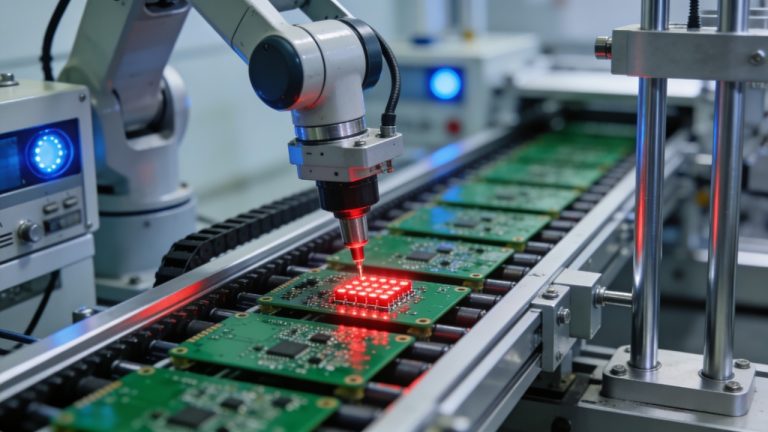
Introduction: Why Choosing a Reliable PCBA Supplier Matters
Selecting a reliable PCBA supplier is one of the most critical decisions for electronics companies. Poor PCB assembly quality can result in product failures, warranty claims, costly recalls, and serious damage to your brand reputation.
A professional PCBA supplier does much more than simply assemble circuit boards. Reliable manufacturers implement strict quality control systems, advanced testing technologies, and full traceability management to ensure every PCB assembly meets industry standards.
In this guide, we will explain:
- How reliable PCBA suppliers control product quality
- The key inspection stages in PCBA manufacturing
- How to evaluate a PCB assembly manufacturer
- Future trends in electronics manufacturing quality control
By understanding these factors, you can confidently choose a reliable PCBA supplier that supports your product development and long-term business growth.
What Is a PCBA Supplier?
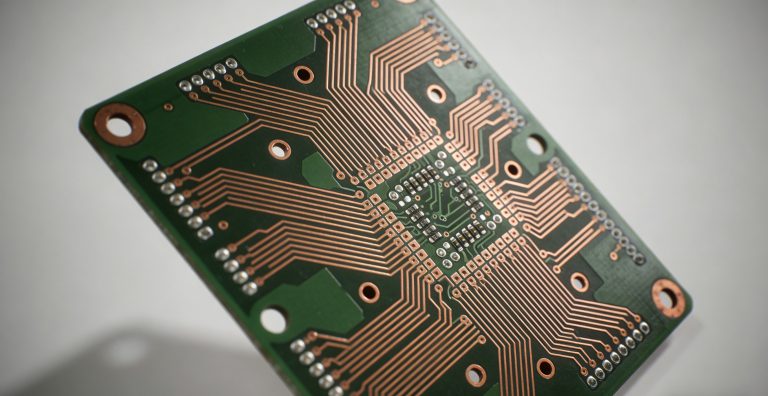
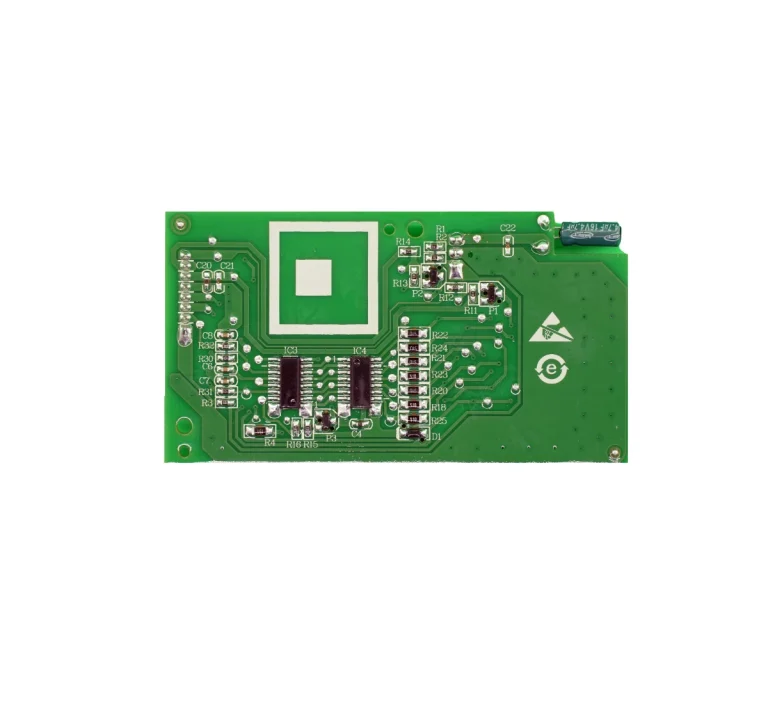
A PCBA supplier is a manufacturer that provides printed circuit board assembly services. Unlike PCB manufacturers that only produce bare boards, PCBA suppliers offer complete electronics manufacturing services, including:
- PCB fabrication
- Component sourcing
- SMT and THT assembly
- Soldering and reflow processes
- Functional testing
- Quality inspection
- Final product assembly
Working with a reliable PCBA supplier helps companies reduce supply chain complexity while ensuring consistent product quality.
Key Quality Control Stages Used by Reliable PCBA Suppliers
Professional PCBA manufacturers implement strict quality control processes throughout the entire production cycle.
These processes typically include:
- Incoming Material Inspection (IQC)
- In-Process Quality Control (IPQC)
- Automated Optical Inspection (AOI)
- X-Ray Inspection
- Functional Testing (FCT)
- Final Inspection and Reliability Testing
Each stage ensures potential defects are detected early and corrected before products reach customers.
1. Incoming Material Quality Control (IQC)
Quality begins with reliable components and raw materials. Reliable PCBA suppliers implement strict Incoming Quality Control (IQC) procedures before production starts.
Typical IQC inspections include:
- Visual inspection of PCB boards
- Component verification and part number confirmation
- Batch traceability management
- XRF testing to detect counterfeit components
- Electrical parameter testing when necessary
Suppliers also maintain an Approved Vendor List (AVL) to ensure that all electronic components come from qualified and verified distributors.
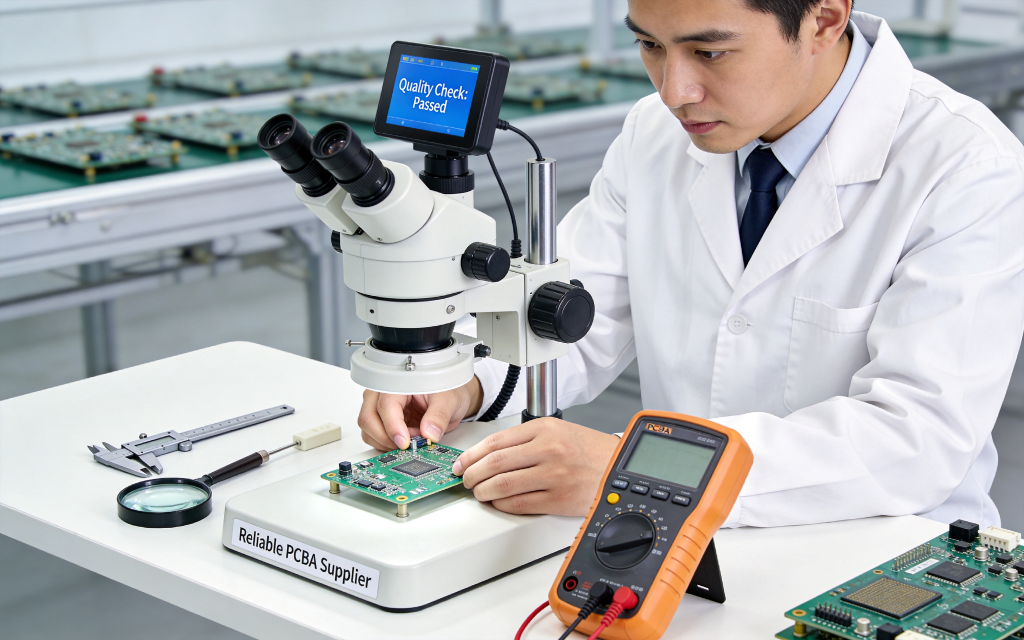
Incoming material inspection ensures that only qualified components enter the production process.
2. Process Quality Control in PCBA Manufacturing
During PCB assembly, reliable PCBA suppliers implement strict In-Process Quality Control (IPQC) systems.
Important production control steps include:
- Solder paste printing with 3D SPI inspection
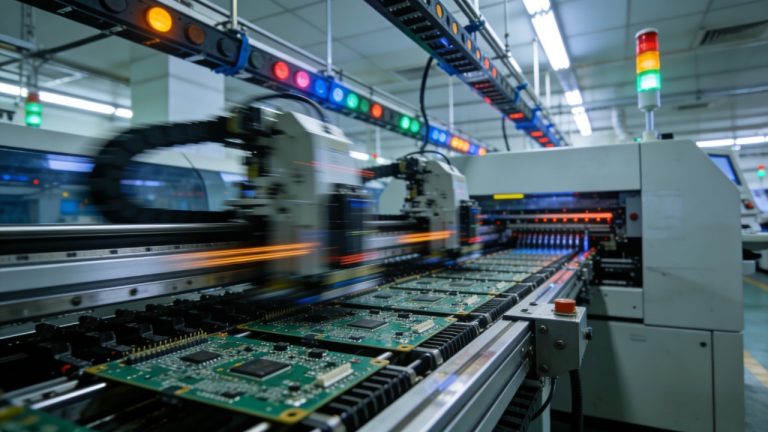
- High-precision pick-and-place machines
- Temperature-controlled reflow soldering
- First article inspection (FAI)
- Real-time production monitoring
Manufacturers also apply Statistical Process Control (SPC) to monitor production data and detect deviations early. This significantly reduces manufacturing defects and ensures consistent assembly quality.
3. Automated Inspection Technologies (AOI & X-Ray)
Modern PCBA manufacturing relies heavily on automated inspection technologies to maintain product reliability.
Automated Optical Inspection (AOI)
AOI systems automatically detect common assembly defects such as:
- Missing components
- Incorrect polarity
- Component misalignment
- Solder bridges
X-Ray Inspection
X-ray inspection is essential for inspecting hidden solder joints under packages such as:
- BGA
- QFN
- CSP
It helps detect voids, insufficient solder, and hidden shorts that cannot be seen visually.
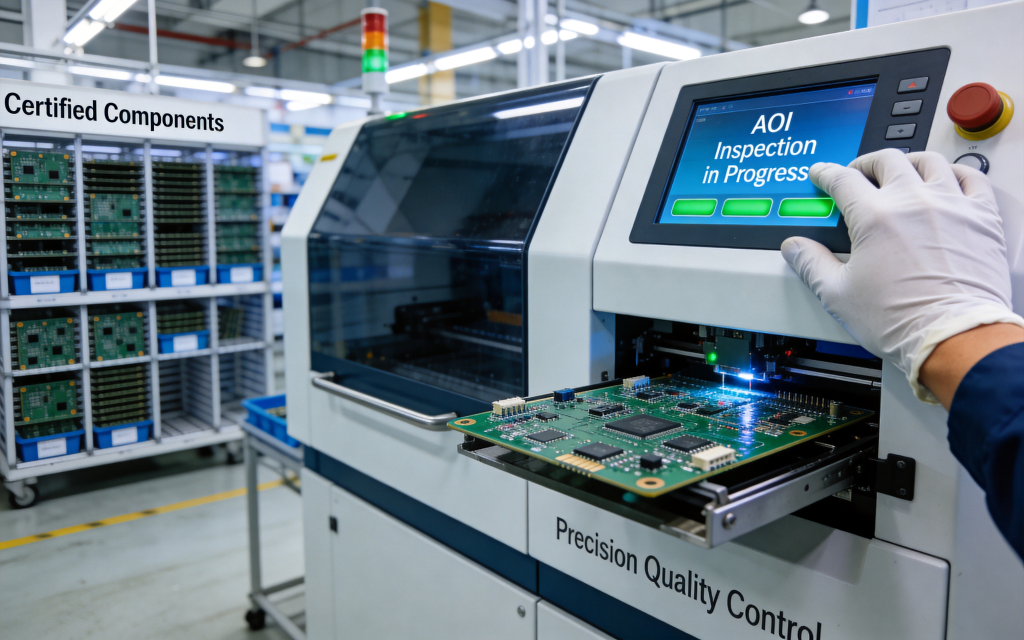
AOI and X-ray inspection are essential tools used by reliable PCBA suppliers.
4. Functional Testing for PCBA Reliability
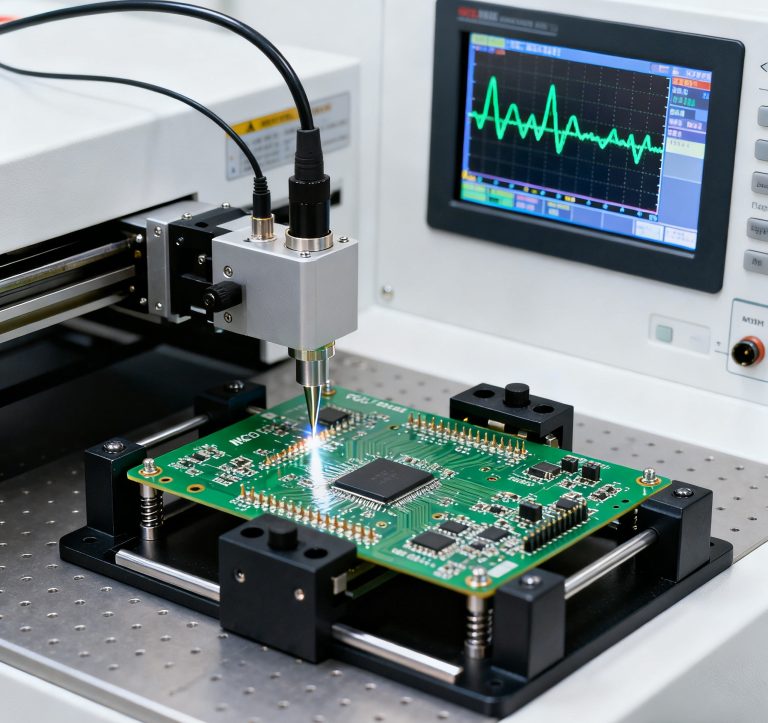
Functional testing ensures that assembled PCBs perform correctly under real operating conditions.
Functional testing typically verifies:
- Voltage and current levels
- Communication interfaces
- Signal integrity
- Sensor responses
- Power stability
Reliable PCBA suppliers often develop custom test fixtures to simulate real operating environments and verify product functionality before shipment.
According to a 2025 McKinsey report, manufacturers that implement advanced automated testing can reduce defects by up to 90% and significantly improve product reliability.
5. Final Inspection and Reliability Testing
Before shipment, PCBA manufacturers conduct final inspections to confirm that products meet quality requirements.
Typical final tests include:
- Visual inspection
- Electrical testing
- Dimensional verification
- Packaging inspection
For high-reliability industries such as medical electronics, automotive electronics, and industrial automation, additional reliability testing may include:
- Burn-in testing
- Temperature cycling
- Vibration testing
- Environmental stress screening
These tests ensure that PCBA products can operate reliably in demanding environments.
6. Full Traceability Systems in PCBA Manufacturing
Traceability plays an essential role in modern electronics manufacturing.
Reliable PCBA suppliers implement complete traceability systems including:
- Barcode or QR code tracking
- Component lot traceability
- Production batch records
- Assembly history tracking
If quality issues occur, engineers can quickly identify the root cause and implement corrective actions.
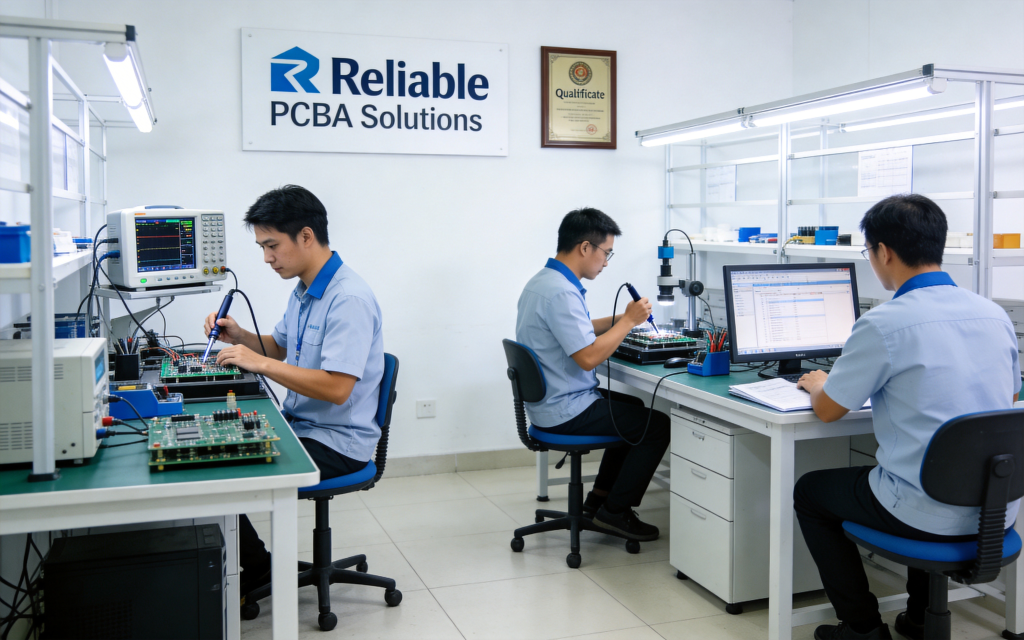
Traceability systems allow manufacturers to track every PCB assembly throughout the production lifecycle.
How to Evaluate a Reliable PCBA Supplier
When selecting a PCB assembly partner, companies should evaluate several key factors.
Important criteria include:
- Manufacturing experience
- Quality certifications (ISO 9001, IPC-A-610, IATF 16949)
- Advanced inspection equipment
- Supply chain management capability
- Engineering support and DFM analysis
- Production lead time
- Customer case studies
Choosing a reliable PCBA supplier ensures that your electronic products meet strict quality and reliability standards.
Future Trends in PCBA Quality Control
The electronics manufacturing industry is rapidly evolving with new technologies.
Key trends shaping the future of PCBA quality control include:
- AI-powered defect detection
- Machine learning-based predictive maintenance
- IoT-enabled smart manufacturing
- Real-time production data analysis
According to the International Society of Automation, companies adopting AI-driven manufacturing technologies can improve product quality by up to 50% while reducing production costs by 30%.
Why Work With a Professional PCBA Supplier
Partnering with an experienced PCBA supplier provides several advantages:
- Stable component sourcing
- Advanced automated production lines
- Strict quality control systems
- Faster lead times
- Global logistics support
A reliable electronics manufacturing partner can help companies reduce manufacturing risks and accelerate time-to-market.
Conclusion
Choosing a reliable PCBA supplier is essential for ensuring the success of electronic products. From incoming material inspection to automated testing and traceability systems, professional PCB assembly manufacturers implement multiple quality control stages to guarantee product reliability.
By working with an experienced PCBA supplier, companies can improve product quality, reduce production risks, and achieve faster product development cycles.
References
1. Alibaba. (2026). Strategic Guide to Finding and Evaluating High-Quality PCB Manufacturer Suppliers. https://www.alibaba.com/price-comparison/what-is-a-pcb-manufacturer
2. greatpcb.com. (2025). Essential Checklist for Selecting a Reliable PCBA Supplier. https://greatpcb.com/essential-checklist-for-selecting-a-reliable-pcba-supplier/
3. McKinsey & Company. (2025). The Future of Electronics Manufacturing. https://www.mckinsey.com/industries/semiconductors-and-electronics/our-insights/the-future-of-electronics-manufacturing
4. International Society of Automation. (2024). The Impact of AI on Quality Control. https://www.isa.org/publications-and-standards/technical-papers-and-whitepapers/the-impact-of-ai-on-quality-control
5. IPC Association Connecting Electronics Industries. (2024). IPC-A-610H: Acceptability of Electronic Assemblies. https://www.ipc.org/standards/ipc-a-610h
FAQ
What does a PCBA supplier do?
A PCBA supplier provides PCB assembly services including component sourcing, SMT assembly, soldering, testing, and quality inspection.
How do I choose a reliable PCBA supplier?
Look for suppliers with strong engineering capabilities, international certifications, advanced testing equipment, and proven manufacturing experience.
What certifications should a PCBA manufacturer have?
Common certifications include ISO 9001, IPC-A-610, ISO 13485 (medical electronics), and IATF 16949 (automotive electronics).
What is the typical PCBA lead time?
Prototype production usually takes 3-14 days, while mass production typically requires 2-4 weeks depending on project complexity.
Do PCBA suppliers support low-volume production?
Yes. Many suppliers offer prototype services with low or no minimum order quantity, which is ideal for product development and testing.